




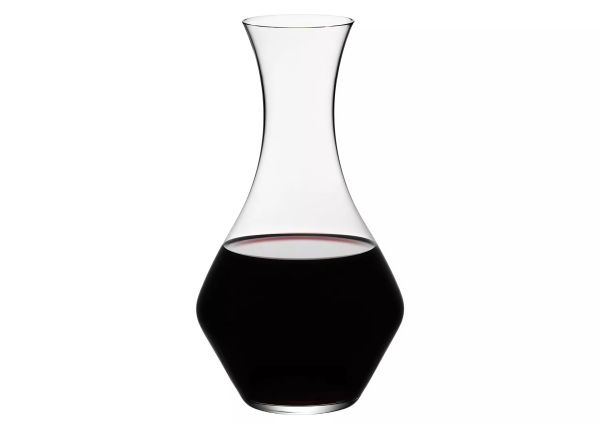
Some like to make New Year’s resolutions each year. Here’s an easy one to accomplish. Decant more wines in 2026.
Why? The vast majority of wine lovers drink wines quite young. Especially for any young red wine north of, say, $20, decanting can help them open up and make them show better.
Decanting can make wines more aromatic. It can help soften tannins. It can help oak integrate. In essence, by providing aeration, decanting pushes the wine toward where it would be with additional time in bottle (sort of).
Less expensive wines, in contrast, are generally specifically made for immediate consumption. No decanting required there.
So, try decanting more young red wines in 2026. Decant them all I say!
You know what I also recommend decanting? Young white wines.
Red wines get most of the decanter love, as their tannins and oak aging mean that they can often benefit significantly from aeration. However, white wines are often made in a reductive environment, meaning with little oxygen present. Many whites also see some oak aging. They are also often released shortly after bottling. Therefore, decanting can benefit young white wines too.
Now, if you want, you can go out and get an expensive decanter. Part of the enjoyment of wine is the overall aesthetic experience. Decanters can be part of that.
You can also buy simple, relatively inexpensive decanters. I like this one, as you can store it in its box and take it on staycations. (Note, that is not an affiliate link.)
Alternately, you can use something as simple as a decanter that many people have on hand, like a water pitcher. Note that it should be something that has a pour spout. Otherwise you’re likely to make a mess pouring the wine.
If your decanter is something that you don’t use often, make sure to give it a good rinse and cleaning before using it. Woe is the person who has poured their wine into a dusty decanter or pitcher.
Personally, I also recommend buying a stainless steel funnel. (They are very inexpensive.) I use the funnel to “double decant” wines. I pour the wine into the decanter, and then, sometimes, I pour the wine back into the bottle. This both provides additional aeration and allows you to serve the wine from the bottle.
Other wines, I like to leave in the decanter. I do this in particular if I’m trying to get maximum aeration for a wine that I’m drinking before its peak drinking window.
How do you know if a wine needs decanting? That is way more art than science.
As I’ve noted, most young red and white wines can benefit from decanting. Personally, if I’m drinking a wine that I’m unfamiliar with, I’ll often try the wine first. Does it seem like it’s ready or does it seem “tight,” with wound up tannins? If it’s the latter, I’ll put it in a decanter.
Over time, I’ve developed a sense of which wines will benefit from decanting and which will not. In the latter case, it’s not to say that decanting will harm the wine, assuming it’s a young wine. Rather, you just won’t see much benefit.
How long should you wait to serve a wine after decanting it? There aren’t really easy rules of thumb. Some wines I pour into the decanter and immediately serve. Others, I give 20 minutes, 2 hours, or even overnight.
One helpful guide for decanting can be looking at drinking windows in reviews. If the wine is close to its ideal drinking window, a short decant will likely do the job. If it’s far away, you’ll definitely want to decant for longer. You can also look on CellarTracker to see if anyone has tried the bottle recently and noted how it’s drinking. If you do this, keep in mind, however, that individual palates differ.
Either way, give decanting a try and see what you find. Here’s to decanting more wines in 2026! It’s one New Year’s resolution you can easily keep.
Northwest Wine Report is wholly subscriber funded. Please subscribe to support continued independent content and reviews on this site.
To receive notifications about new articles via email, click here.

Thanks for this. It sounds like you don’t really see a “downside” to decanting – is that fair to say? How about for wines on the “far” side of the drinking window?
I have a nice, hand blown decanter. I clean it on the regular, so this may be my imagination, but I swear there is a “red wine tinge” at the bottom (tall, narrow decanter, not “ship” style). How do you clean decanters that may have been left over night with a weeee bit of wine left?
John Johnson, apologies for the delay!
To me, there’s little downside to decanting young wines, as long as they are of sufficient quality. As I said in the article – though its somewhat of an arbitrary point – around $20. Under that, the wines are surely made for immediate consumption and decanting them might make them go downhill quickly.
As wines move through their aging window, I am more cautious. If I am unfamiliar with a wine, I’ll taste it first and decide whether I want to decant it or not. If I am familiar with it but I’m not sure where it’s at, I’ll do the same.
Believe it or not, wine does stain glass. So does water.
Decanters can be notoriously hard to clean and keep clean. First *always* rinse them immediately after use. Try to get as much water out as you can.
Beyond that, if you search on-line, you’ll see a variety of suggestions. This article from Wine Enthusiast, where I used to work, does a good job.
https://www.wineenthusiast.com/basics/how-to-clean-a-wine-decanter/
Personally, I wouldn’t try the rice suggestion. It can stick to the side of the decanter, and then you’re really in trouble.
The main thing is to not let it get overly stained. Regular cleaning helps there.
I decant almost all of my reds, except the lighter styled ones. If they are older, it is mostly to pour out and avoid sediment, so they get poured into a glass shortly. I have had friends decant an older wine too long and been disappointed that the fruit blew off early after opening. Your advice to taste first is spot on, as some definitely do not need to. I heard that Sauternes can improve with a decant as well, although I am usually too impatient to wait around! I need to try decanting whites more often. As they are typically chilled when opening, they need to warm up anyways. Cheers.
Steve, personally, I am VERY cautious about decanting older wines. For sediment, I personally prefer to stand the bottle upright for a period of time (24-48 hours) rather than decanting.
Some older bottles, however, really do benefit from decanting. It can be a tough call.