




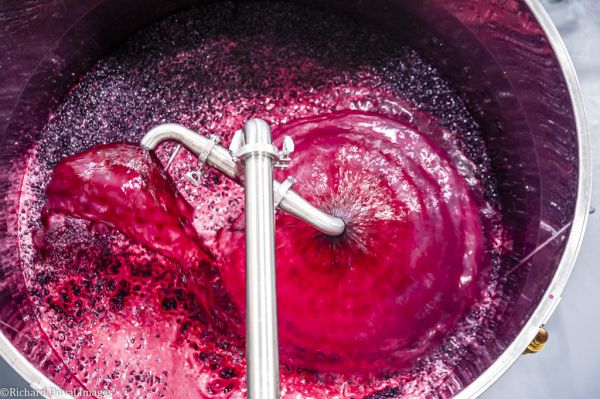
 After successive years in the doldrums, bulk wine sales are starting to pick up in the Pacific Northwest. “We’re starting to see at least a mini rally,” says Adam Schulz, owner of Incredible Bulk Wine Company in in Pasco, Washington. “We’re starting to see some signs of life that have been missing the past couple years.”
For Schulz’s business, the renewed energy began right at the start of 2026.
“The first week of the year, I probably wrote as many contracts as I have in the winter of 2025 and 2024,” he says. That stood in marked contrast to business two years ago. “In 2024, I could have rolled tumbleweeds through my office it was so quiet,” Schulz says.
What’s driving these sales? Exceptionally low bulk wine prices. For example, Napa Valley Cabernet Sauvignon at $15 a gallon. Willamette Valley Pinot Noir for $11 a gallon. Washington Cabernet for $5 a gallon.
However, businesses only buy bulk wine that they are confident they can sell. If they can, current prices provide an opportunity.
“For people that are actually able to sell wine right now, the low prices are incredibly advantageous,” says Schulz.
So, who’s buying? So far, Schulz says that it’s still a reasonably small number of businesses.
“It’s companies that have the sales channels and have the wherewithal to cash flow these transactions and get the wine to the market quickly. It seems like they’re seeing a lot of success though.”
Some of the buyers are, of course, large businesses. However, Schulz has also seen a return of small and mid-sized players as well, an encouraging sign.
“I was only doing large volume, low dollar deals last year,” Schulz says. “Now, there’s a return of the small to mid-sized bulk wine buyer, where people are buying 600 to 1,000 gallons. It seems like another small sign of a slightly healthier wine economy.”
Schulz is also seeing repeat buyers.
“Heading into the second quarter [of 2026] on some Washington wines that I sold in the first quarter, people are buying again at a much faster velocity than they have since 2022, 2023,” Schulz says.
Of course, selling wine at severely depressed prices is not sustainable for bulk wine producers long-term. Right now, however, simply moving wine through the supply chain is important. One, it provides cash flow. Two, there is substantial cost associated with storing wine.
Equally importantly, low bulk wine prices depress production, which subsequently decreases grape sales. Neither will change until the existing backlog clears.
“The low base amount of bulk buying prices precludes people that have steady, ongoing programs to want to continue producing because they can buy it at half the cost or less,” Schulz says. “They can let somebody else do the production and aging, do a 60 day line of credit instead of getting an operating loan from a bank, and they’re turning their cash much quicker.”
How will the existing backlog clear? Part of that needs to come from wine sales. Another part needs to come from decreasing production.
Schulz says large bulk wine producers in Washington and Oregon will intentionally make significantly less wine in 2026. As a result, in time, grape sales should increase, as should bulk wine production.
“The hope is that, in 2027, there will be grape buyers again, which would signal the overall healthy return of all layers of the market,” Schulz says.
Overall, Schulz says that what his business is experiencing provides reason for something that has seemed in short supply in the wine industry of late: optimism.
“I’m encouraged by what I’m seeing,” Schulz says. “I’m excited about it.”
Image by Richard Duval.
To receive notifications about new articles via email, click here.
Do you enjoy Northwest Wine Report? If you do and haven’t already, please subscribe. Northwest Wine Report is 100% subscriber funded. To those who have subscribed, thank you! You power this site.




Leave A Comment