




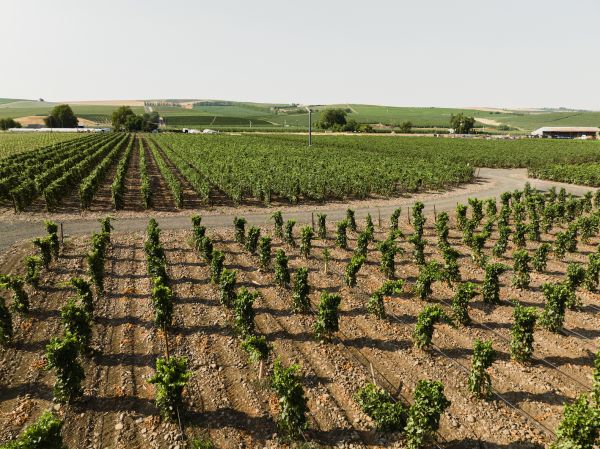
Orselli Vineyard, Walla Walla Valley
“If you would have asked my graduating class in a town of 2,000 people in Nebraska who was least likely to become a farmer, I would have won that hands down,” says David Wanek, co-founder of Walla Walla Land Company (WWLC).
What might surprise his classmates even more then is that Wanek and his business partners are now among the largest vineyard owners in one of the U.S.’s premier winegrowing regions. More surprising still, the group’s new Cimento winery is making some of Walla Walla Valley’s most compelling wines.
“We should do something here.”
The story of Walla Walla Land Company and Cimento is one of patience. To wit, the company is now in its eighth year, and Cimento just released its first wines last year.
“We’ve been purposely silent as we’ve been building and doing what we’ve been doing,” Wanek says.
Though he grew up in Nebraska, Wanek has lived for over a quarter of a century in the Bay Area. There, he serves as chief executive officer of Western Technology Investment, an investment capital company.
Wanek first became interested in wine after moving to the Bay Area and visiting Napa and Sonoma with friends. With a home in Sandpoint, Idaho, he soon took an interest Pacific Northwest wines, focusing on one area in particular.
“I really fell in love with the wines of Walla Walla Valley,” Wanek says. “I like the breadth of the wines, and I like the balance.”
Soon, Wanek also found himself charmed by the area’s potential. “I had a friend who said, ‘Hey, this kind of looks like Napa in the ‘80s. We should do something here,’” Wanek recalls.
“There’s value in the land”
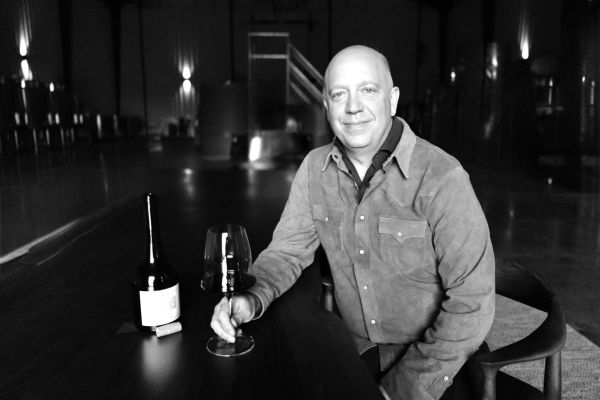
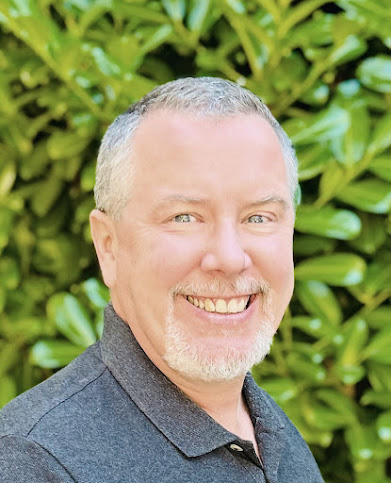
David Wanek. Walla Walla Land Company and Cimento Wines by Carrie Alexander
Inspired by a birthday party in Walla Walla over a bottle of 1961 Giacomo Conterno Monfortino Barolo, Wanek took on the task of creating a business plan. He arrived at several conclusions.
“We came back to this notion that there’s value in the land, and there’s value in growing vineyards,” Wanek says. “If you’re thinking down the road and willing to make a multi-generational bet, you buy land and try to zero in on places that you think are unique and interesting.”
Another aspect that stood out looking at the Northwest generally and Walla Walla Valley specifically was the cost of the fruit relative to the quality of the wines.
“The cost of farming is not that different anywhere up and down the West Coast, but the cost of fruit is wildly different,” says Wanek says. “Without question, the lowest price of fruit of any region was in [Washington]. That can’t last.” A changing climate and consumer demographics were also considerations.
Next, Wanek focused on something he saw in other well-known wine regions: estate quality fruit, farmed at the highest possible level, that is not estate. “We liked a lot what Andy Beckstoffer did in the way that he thought about having the vineyards be brands themselves,” Wanek says.
From all this, Wanek and his business partners, Andy Reiner and Jeff Bond, decided to plant and buy vineyards in Walla Walla Valley and to farm them for the highest level of quality. Walla Walla Land Company was born.
“A singularity of the terroir”
Straight off, WWLC decided to focus on the Rocks District of Milton-Freewater, a nested appellation of Walla Walla Valley on the
Please login below to see full content or Subscribe Now to get immediate, full access to our ratings and reviews, review database, featured articles, and other subscriber-only content.
Leave A Comment