




 Too many winemakers don’t know enough about the subject
(Editor’s note: This is the second in a series of articles this week on smoke impact in wine. Read the first.)
When I first started to come across wines I perceived as smoke impacted, an interesting thing happened. I talked to a wide assortment of winemakers, and most of them knew absolutely nothing about the subject.
Winemakers would routinely tell me that they tasted the grapes, and they tasted fine. (Smoke impact cannot be reliably perceived tasting grapes.) They would say that the smoke was pre-veraison, so it wouldn’t be an issue. (This is a myth.) They would say the source of the smoke was too distant to have an impact. (This is not reliably true, as many factors come into play.) They would often rely on group think of what others were saying. (This way too informal and error prone.)
Overall, winemakers were surprisingly flatfooted about something that represented an existential threat to their businesses. It was shocking.
A number of years and several smoky vintages later, much has changed. The floor of knowledge is higher. Winemakers now talk about doing bucket ferments, testing for guaiacol and 4-methylguaiacol, and looking at a variety of other factors. Still, there is a lot less understanding of the subject than there needs to be.
As someone who has spent a great deal of time researching smoke impact in wine and attending free seminars, it’s clear to me within about a minute of speaking with someone how much time they have spent (or not) learning about the subject. For too many winemakers, they know much less than they should.
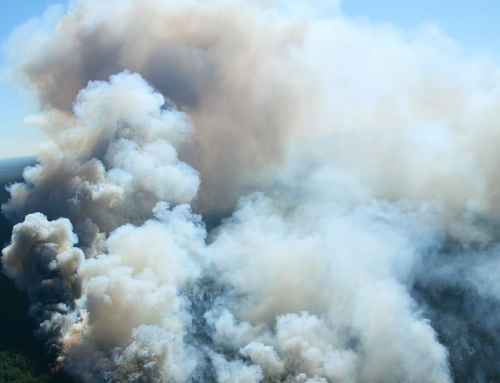
In terms of the U.S wine industry, it was acceptable to be flatfooted in 2017 or 2018. But it’s completely unacceptable after 2020, when the entire west coast was blanketed by smoke for a period. That was the warning shot that should have made everyone work to get up to speed. Yet too many people didn’t.
Smoke impact is an existential threat to the wine industry. It is a bigger threat than climate change, although it’s related, of course. It is a bigger threat than shifting consumer habits. It’s a bigger threat than the World Health Organization demonizing alcohol. In fact, one could argue that that smoke impact is a bigger threat than all of those things combined.
It’s true that, right now, there is no agreed upon, scientifically proven way of eliminating smoke impact in wine. However, there is no excuse for not knowing the ins and outs of the subject. It should be viewed as an obligation to the winery, to customers, and to the industry.
Smoke impact is only going to increase as an issue in the coming years. It’s time – well past time, really – for winemakers to make sure their understanding of the subject is is up to speed.
To receive email notifications about new articles, CLICK HERE.
The Northwest Wine Report Fall Subscriber Drive has started! If you’re not already a subscriber, please consider subscribing now. It’s the only way that this site will be able to continue publishing in 2027. See the number of new subscribers still needed on the top right of the site. Click on the button below to subscribe.


Leave A Comment