




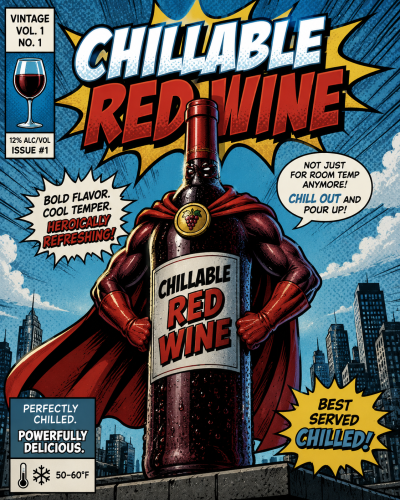
 The wine industry might have found a big win in seemingly the most unlikely of places: chillable red wines. It’s a category that can appeal to new wine drinkers and bridge gaps with existing ones. Numerous producers in Washington are now exploring this category and finding success.
“The customer response has been strong,” says Andrew Latta of Latta Wines in Seattle.
Latta makes two chillable red wines under his Lucius label. He started with Mourvèdre, making 400 cases. The wine sold out in six weeks. He subsequently doubled production for the current vintage.
“It’s been flying off the shelf,” Latta says.
Gateway wines
Who’s buying chillable red wines? Somewhat surprisingly, it’s a mixture of consumers young, old, and new.
“We’ve been getting a really good response on chillable reds with younger people,” says Brian Rudin, winemaker and general manager at Echolands Winery in Walla Walla. “They turn your expectation of what a red wine is on its head. People like that.”
“Especially for younger consumers, there is absolutely a market for these wines,” says Matîas Kúsulas, winemaker at Prosser’s Gard Vintners, which recently started making a chillable Pinot Noir. “But there’s also a market for consumers who are getting into wine in general.”
Chillable reds are also ideal gateway wines for people who might favor reds wines but ignore whites. The reverse is also true.
 “For whoever only drinks white wine, this is your angle to get into the red wine world,” says Kúsulas. “Whoever wants to start drinking red wines, well this is your angle to get into white wines. I think it’s sitting in between, which is actually pretty cool.”
Breaking rules
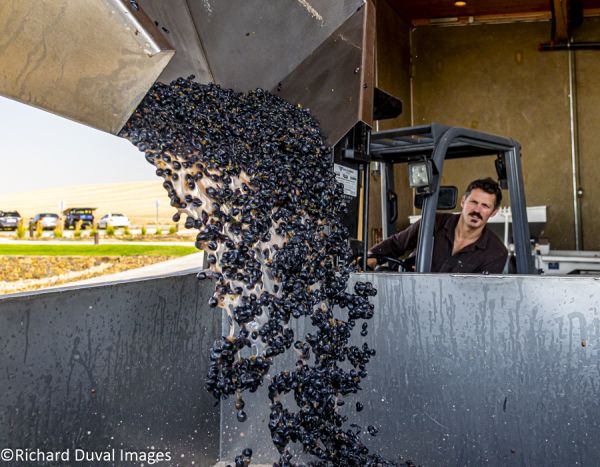
How are chillable red wines able to straddle so many different areas? Much of it has to do with how the wines are made. Many – though not all – chillable reds use a process called carbonic maceration during winemaking.
The process, which is commonly used in Beaujolais for Gamay, creates wines with lifted, fruity aromatics. The wines are both surprising and directly appealing.
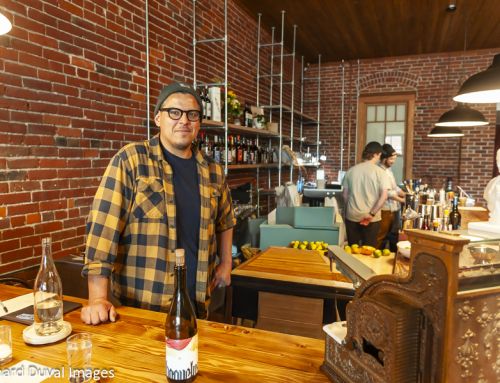
Brian Rudin, Echolands by Richard Duval
“I have a lot of customers that didn’t know what to expect, and that’s what they end up walking away with,” Kelsey Itämeri of Itä Wines says of her Carbonic Zinfandel. “It’s just so memorable, especially if you come on a wine tasting weekend and you’re tasting a lot of wine, this one just really jumps out at folks.”
Chillable red wines are also often lighter in color, lower in tannin, and less extracted (think less intensity). This makes them more approachable out of the gate.
“All the variables that you normally need for a red wine, you don’t need in this particular case,” says Kúsulas. “You don’t need a lot of color. You don’t need a lot of tannin. You don’t need a lot of phenolics. It’s all about balance and that they taste good.”
For the winery, meanwhile, chillable red wines can be made and released shortly after vintage, providing quicker cash flow. This also makes the wines more accessibly priced for consumers. The style, meanwhile, makes the wines downright fun.
 “You can break some rules and do some things that infuse the wines with a sense of creativity,” Rudin says. “I think people are finally ready for this, and people are hungry for this. We can do things that aren’t a traditional wine style and still make wines that taste good and price them around 30 bucks.”
Toggling on tannins
One can, of course, chill any red wine. Some red wines, however, will not show well cold. What’s the determining factor?
“Generally speaking, the toggle is the tannins,” says Rudin. “Bold tannins always taste pretty bad on the palate when a wine is cold. If you have too much tannin with a chilled red wine, it’s like wearing too big of a suit jacket. It just doesn’t look right.”
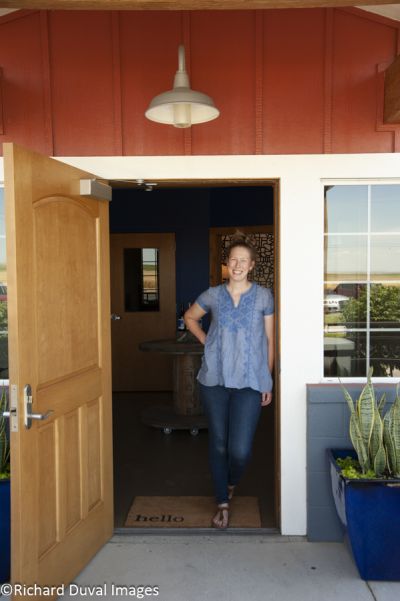
Kelsey Itämeri, itä wines by Richard Duval
For this reason, varieties and regions that are naturally lower in tannin are favored for chillable reds. Echolands sources fruit for its chillable Grenache in what would seem to be an unlikely place: The Rocks District of Milton-Freewater, known for its earthy-savory profile.
“What is so valuable about The Rocks in this regard is that, across almost all varieties, it does produce really light tannin,” Rudin says. “We’re picking the grapes earlier, so you don’t get as much of that Rocks influence, but it’s still delightful to drink.”
“It’s a different experience,” Latta says of chillable reds. “Our chilled Mourvèdre is so juicy and low tannin. Then our Grenache has more grip to it, but it has this insane carbonic nose. It’s what I’ve been drinking around the house. It’s just really fun.”
Pushing creative thinking and innovation
Generally speaking, lighter colored, lower tannin, low new oak red wines are a good place to start when chilling red wines. Part of the fun with the chillable red category, though, is that it allows one to experiment.
“I encourage people to find out what their preference is, because it is a preference,” Itämeri says. “You don’t have to chill a chillable red because somebody tells you to. Don’t do it with your most expensive bottle, but get two different two bottles of the same red wine and chill one and don’t chill the other, and see which one you like better.”
How much should one chill the wine? Itämeri says that, for her wine, it’s very weather-dependent.
“Right after release, when it’s Thanksgiving, I don’t chill my wine that much. I maybe have it at cellar temperature,” she says. “When it starts to get warm outside, I start chilling it.”
 The chillable red wine category allows winemakers to experiment too.
“It’s helping to push a lot of creative thinking and a lot of innovation in winemaking,” Rudin says. “There’s no playbook, for the most part, for how to do carbonic maceration with grapes that aren’t Gamay. You can rarely even ask a friend. So it requires every winery that’s doing this, small, medium size, or big, to get in there and just start playing around and learn how these things work, which is fun.”
Creating a “sensation of deliciousness”
Of course, while many consumers are embracing chillable red wines, some are not. In fact, some turn up their noses at them. Chillable red wines are often light in color and low in tannin, which can be difficult for those who are used to opaque, burly reds.
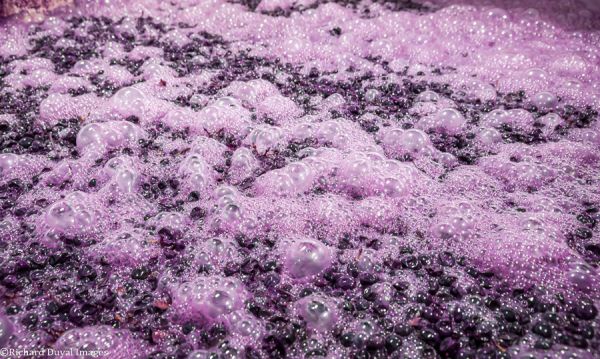
Fermenting grapes by Richard Duval
“Some older, more seasoned wine connoisseurs, if you pour them a chillable red and they haven’t had a few before, they’re like, ‘Please pour me some real wine!’” says Rudin with a laugh. “For some people, it just doesn’t check the box for red wine. But there’s even more people who are enchanted with the novelty of a wine like that.”
Additionally, some might not look at chillable reds as “serious” wines. These are, quite intentionally, wines that one doesn’t need to think too hard about. And that’s okay.
“As long as the wine creates a sensation of deliciousness on the palate, you’re winning,” Rudin says. “If you have to explain the wine to someone, you’ve missed the mark.”
Not “your grandfather’s wine”
 While chillable reds are notable for their easy accessibility, there are some things to be aware of for those who are new to the category. One is that chilling the wine might create what are called tartrate crystals or “wine diamonds.” They are in no way harmful but might surprise some consumers.

Matías Kusúlas, Gård Vintners by Richard Duval
“A lot of red wines that are appropriate for chilling may not have been cold stabilized,” Itämeri says. “If you’re putting the wine in your fridge and you forget about it for a day or two, then there will be the tartrate crystals.”
Most chillable reds are also not intended for aging. The reason is that they are often lower in color, tannin, and other aspects that impact ageability.
“We really try to over-communicate that people should treat these wines like a rosé,” Rudin says. “Drink it in the next two years for maximum freshness.”
Still, with wine often stuffy, unapproachable, and overly expensive, chillable reds seem like a breath of fresh air. They also just might offer a lifeline to an industry that could use one.
“My favorite thing is seeing a tasting room with a really good spirit in the air and people of all ages having fun and feeling like they belong here,” Rudin says. “Chillable reds really are a conduit to that because people feel like they aren’t drinking their grandfather’s wine. Nobody wants to drink the wine version of a Buick or an Oldsmobile.”
Select recommended chillable reds
Echolands Cinsault Walla Walla Valley $38
Echolands Grenache Walla Walla Valley $40
Itä 2025 Carbonic Zinfandel Walla Walla Valley $30
Lucius 2025 Chillable Mourvèdre Yakima Valley $25
Lucius 2025 Tastee Moustache Yakima Valley $28
Rujaya 2024 Chillable Red Columbia Valley $28
The Walls 2025 In the City Yakima Valley $32
Do you enjoy Northwest Wine Report? If you do and haven’t already, please subscribe. Northwest Wine Report is 100% subscriber funded. This site can’t continue to exist without your support. To those who have subscribed, thank you! You power this site.




Leave A Comment